

You should have the feeling of ownership, but the flexibility of hiring. That is the core of Cefalo. One client, one team, one relationship at a time.
Fifteen years later, the company is still built on the same principle. The client leads their own team. Cefalo takes responsibility for recruitment, frameworks, and culture – ensuring that people thrive and grow, both professionally and socially.
Tom Handegård, Morten Krogh Moe and Per Einar Myklebust had all worked closely with developers in Bangladesh when they founded Cefalo in 2010. They had seen the value of collaboration built on trust, responsibility and a sense of belonging.
They knew it worked when done right. They did not want to run a traditional outsourcing company. Instead, they wanted to give Norwegian companies their own teams of highly skilled developers, within a framework and culture that allows both people and solutions to grow.
– We had experienced what works and what doesn’t. We knew this was valuable – and we knew we could do it well, says founder and COO of Cefalo, Per Einar Myklebust.
A close relationship between client and developer
The model was clear from the start. The client leads their team in the daily work. Cefalo handles recruitment, frameworks and operations. The result is the flexibility of external hiring combined with the sense of ownership that comes from having your own team.
– This is not body shopping. Teams are not moved between projects or clients. The relationship is direct and long-term, says Myklebust.
The principle has held for 15 years. They find the client first, and hire the right competence afterwards. Just like when they started out in a tiny apartment in Dhaka, with their first client already «in the bag».
– We travelled to Dhaka after signing the client, and found a managing director, an office and employees. In that order, Myklebust recalls.
The first milestone
It was not the easiest of journeys. In the early years, building trust and establishing a reputation in both Norway and Bangladesh was challenging. But progress came one step at a time, one customer at a time.
Cefalo built its reputation in Bangladesh as a reliable employer that pays the right salary at the right time. The goal was to become an employer developers actively seek out.
– Selling with few references was difficult. We had to prove that we were a solid employer and provider, Myklebust recalls.
Gradually, a new normal emerged. Distance became less intimidating when roles were clear and ownership was placed correctly. In 2014, Cefalo had more than 50 employees. A true milestone.
– At that point, we could lose a client without it threatening our existence, Myklebust adds.
%201.png)
CEFALOS OFFICES IN DHAKA: Cefalo started out in a small office in an apartment, and has grown into a top modern fasility in Dhaka. This is what the open landscape looks like.
An exceptional leadership talent
The model and structure are one thing. The people working at Cefalo are something else entirely. In Dhaka, one person in particular became crucial to making Cefalo work as intended.
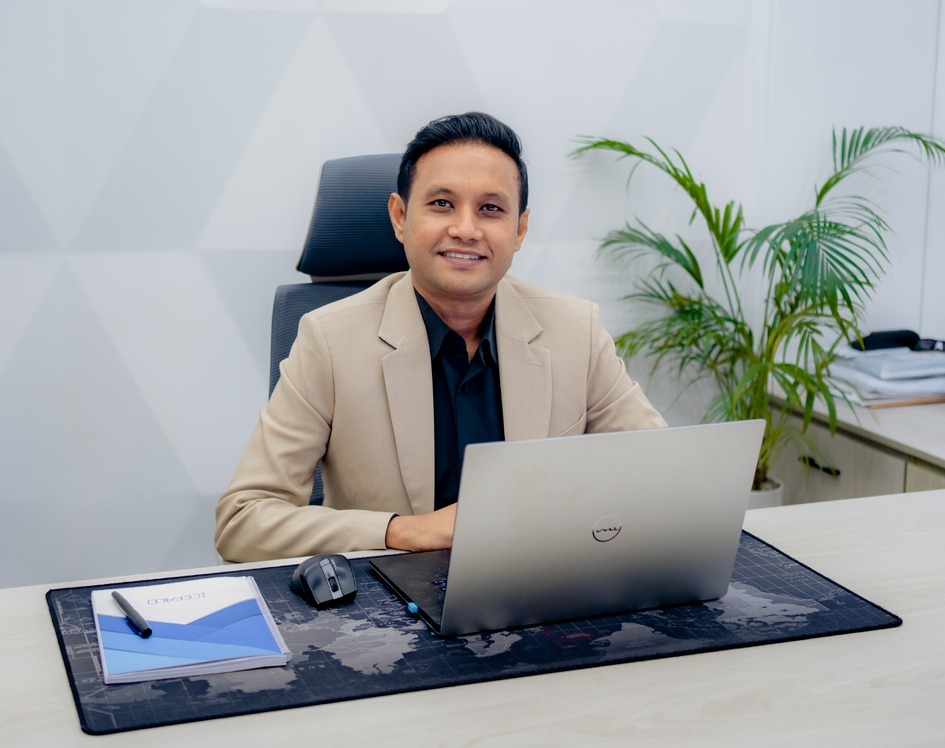
Ferdous Mahmud Shaon joined Cefalo as a developer in 2012. Both Tom Handegård and Per Einar Myklebust knew him from previous collaborations. He was technically strong, conscientious and hardworking – but there was more to it.
– We saw early on that Shaon had leadership talent. He was wise, adaptable and highly respected by his colleagues. When the opportunity arose, we chose to give him responsibility as managing director of the Dhaka office. It turned out to be an excellent decision.
Close collaboration with Dhaka
Shaon has been absolutely crucial to building Cefalo in Bangladesh: Culture, routines, systems and, not least, the ever present human relations. For many years, he was the direct manager of nearly all employees in Dhaka, and he has personally shaped the recruitment processes that Cefalo still uses today.
– HR is his most important area of responsibility. That’s where culture is built in practice, Myklebust explains.
The collaboration between Oslo and Dhaka is close. The Norwegian administration has daily contact with Shaon, and he is given full trust and significant freedom to run the office in what he believes is the best way for the company.
– It’s absolutely crucial that we don’t bypass him. All employees in Dhaka should experience Shaon as the manager. At the same time, he has a clear mandate and a voice that is listened to – both locally and in the management team in Norway, Myklebust adds.
Today Shaon leads more than 200 employees in Dhaka, and it is no coincidence. It is the result of long-term thinking, trust and a deliberate willingness to let people grow over time.
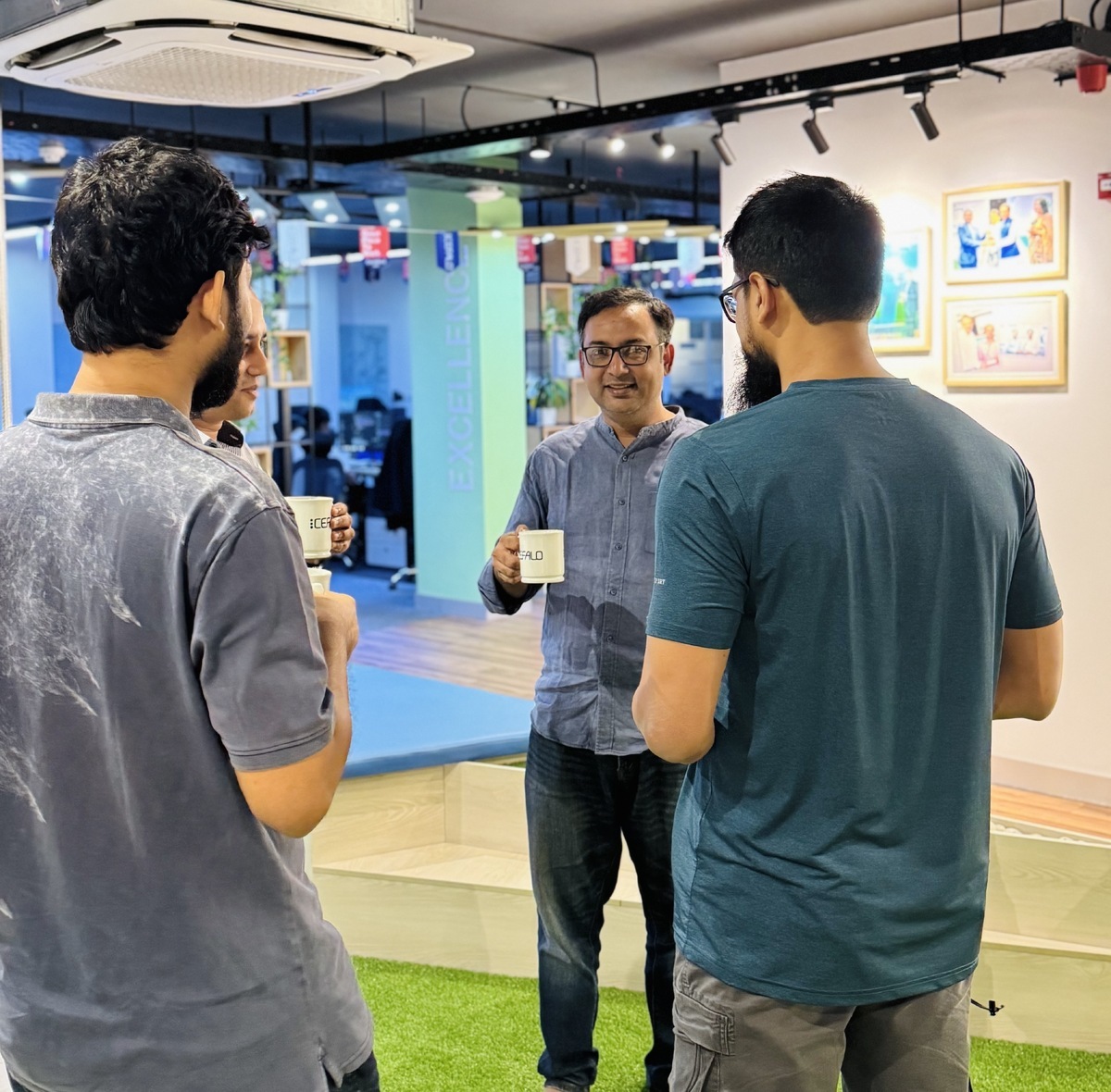
HUMAN RELATIONS ABOVE ALL: At Cefalo, everything depends on our developers. Keeping them happy and growing, is key for us.
The pandemic as a game changer
Just before the pandemic, Jens Wahlberg was brought in as Head of Sales at Cefalo. Then the country shut down. Meeting rooms moved into homes. Video calls on Zoom and Teams was the new standard, and calendars changed character.
– The pandemic was a real game changer for us. Previously, we had only worked in the Greater Oslo area. Suddenly, we could work systematically across all of Norway and hold far more meetings, explains Myklebust.
Almost overnight, it no longer mattered whether the team was located in Oslo or in Dhaka. The client was on the video screen either way.
– Many of our clients we have still never met physically. It works for Cefalo, because the relationship is close and responsibility is clearly defined, Myklebust says.
The effect was not a sudden jump, but steady growth that gradually accelerated. Today, Cefalo has around 250 employees, all working exclusively for Norwegian clients.
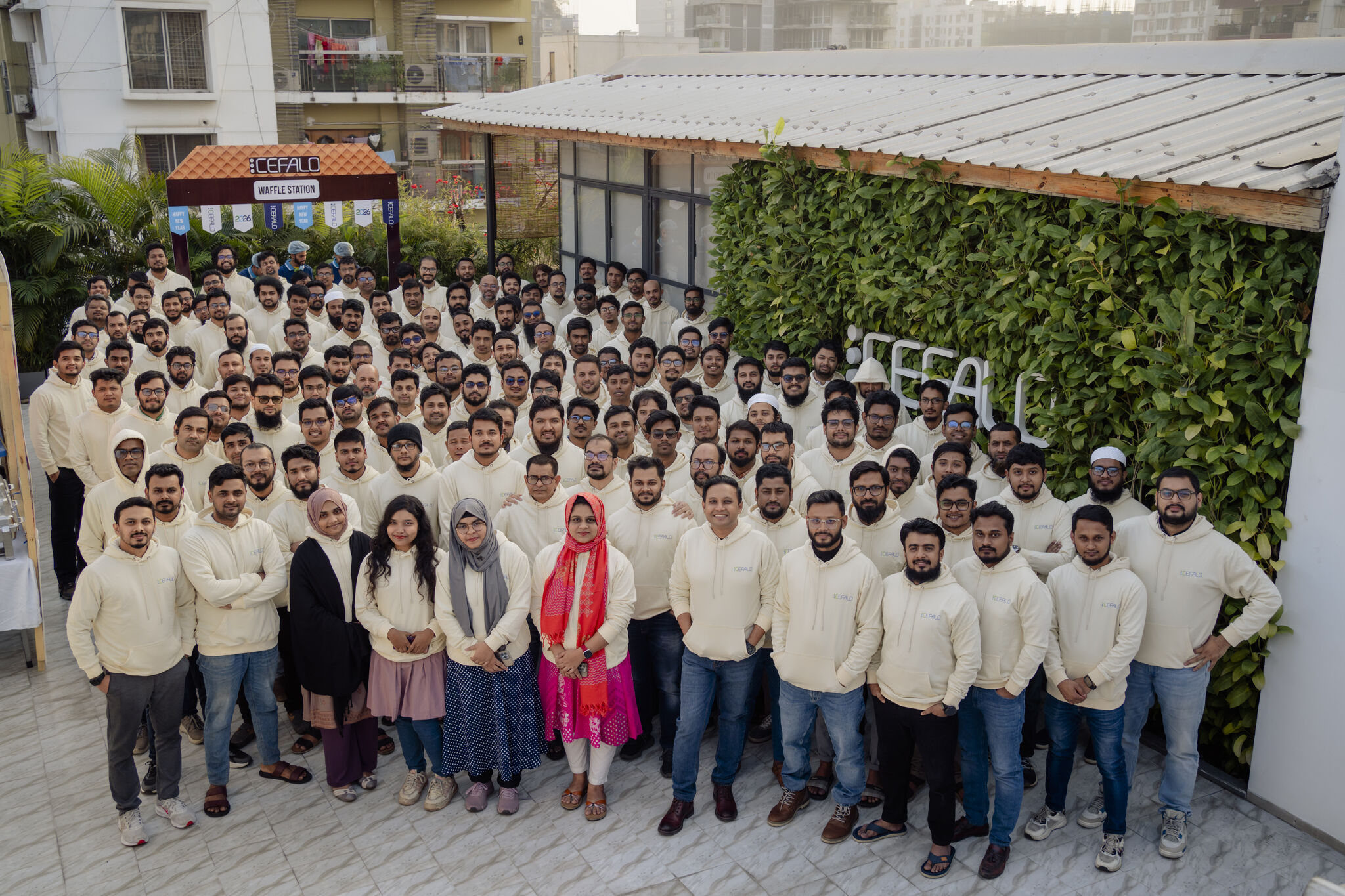
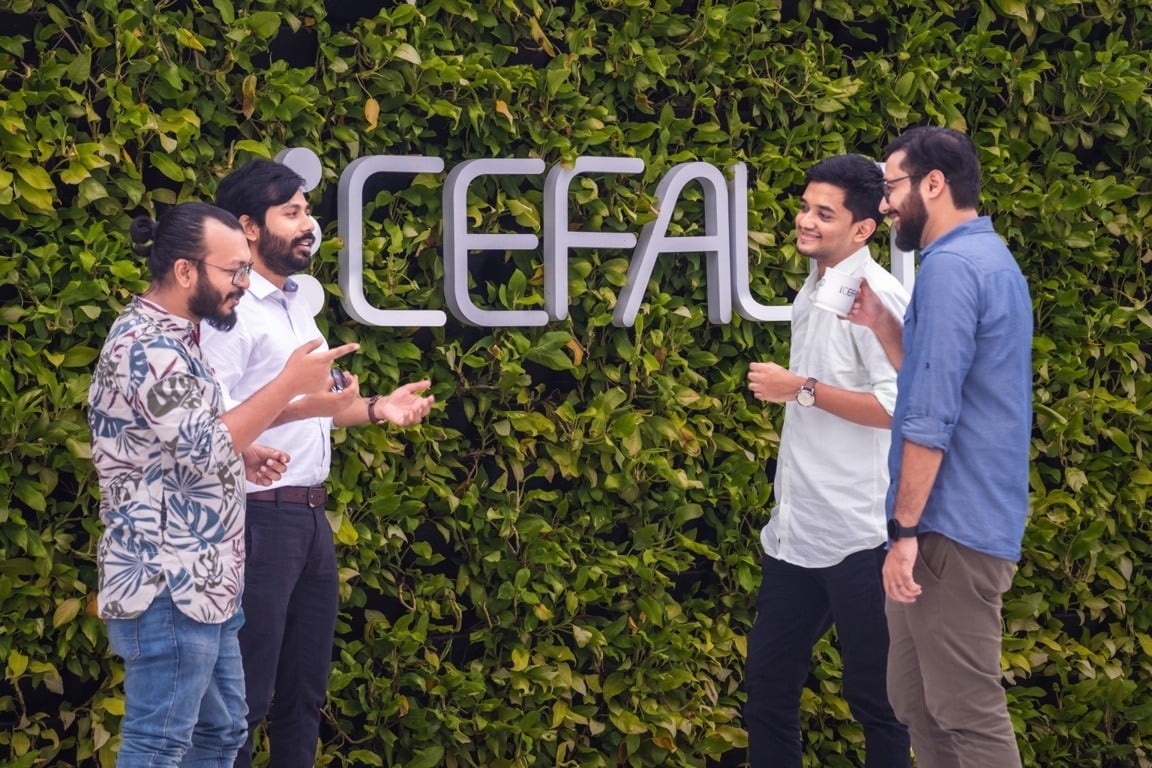
BUILDING A STRONG CEFALO CULTURE: The developers work in more than 40 smaller teams for Norwegian clients, but Cefalo works hard to create one, strong Cefalo culture.
First and foremost an employer
In a consulting company, everything revolves around skilled people. Everything depends on them. And you only attract great people if you treat them well.
That’s why Cefalo has invested just as much effort in its role as an employer in Dhaka as on the client side in Norway. Good offices, clear frameworks, defined expectations and a culture that balances well-being and professional excellence. Myklebust openly acknowledges that rapid growth during the pandemic was a stress test for the culture.
– Things creaked a bit during the intense growing phase of the pandemic, but we recovered. We have many culture carriers among our employees, and we actively nurture them, he says.
It also shows in the company’s reputation:
– A drone video from our new offices went viral last year, and the office has become something of a «place to be». Many people stop by just to have a look, he says.
Social responsibility in practice
The internal company culture is strong, with high engagement, many social activities and a strong sense of community – both locally and across client teams and borders.
At the same time, Cefalo has a strong sense of social responsibility. Myklebust is a former nurse, and passionate about giving back to the society that supports Cefalo. Every year, a donation is made to a charitable cause, chosen by the employees themselves. The choice has fallen on the JAAGO Foundation.
– Through JAAGO, we sponsor schooling for between 30 and 50 children every year. Education is the key to a better life for many living in the slums of Dhaka, Myklebust explains.
Less mystery, more everyday mechanics
The world has become smaller over the past 15 years. Cultural differences no longer feel as large. Distances are shorter, and the world feels a bit rounder. Younger generations in Bangladesh are more similar to their peers in Norway, while Cefalo has developed a clear culture of its own.
– New hires are absorbed into something that works. Our onboarding process makes the transition to Norwegian work culture easier than before, says Myklebust.
That doesn’t mean cultural differences are gone, but that they are handled in practice. Clear roles, responsibility and follow-up. Everything is systemised. Small adjustments are made continuously, and the trust required to succeed is built day by day – and not in policy documents.
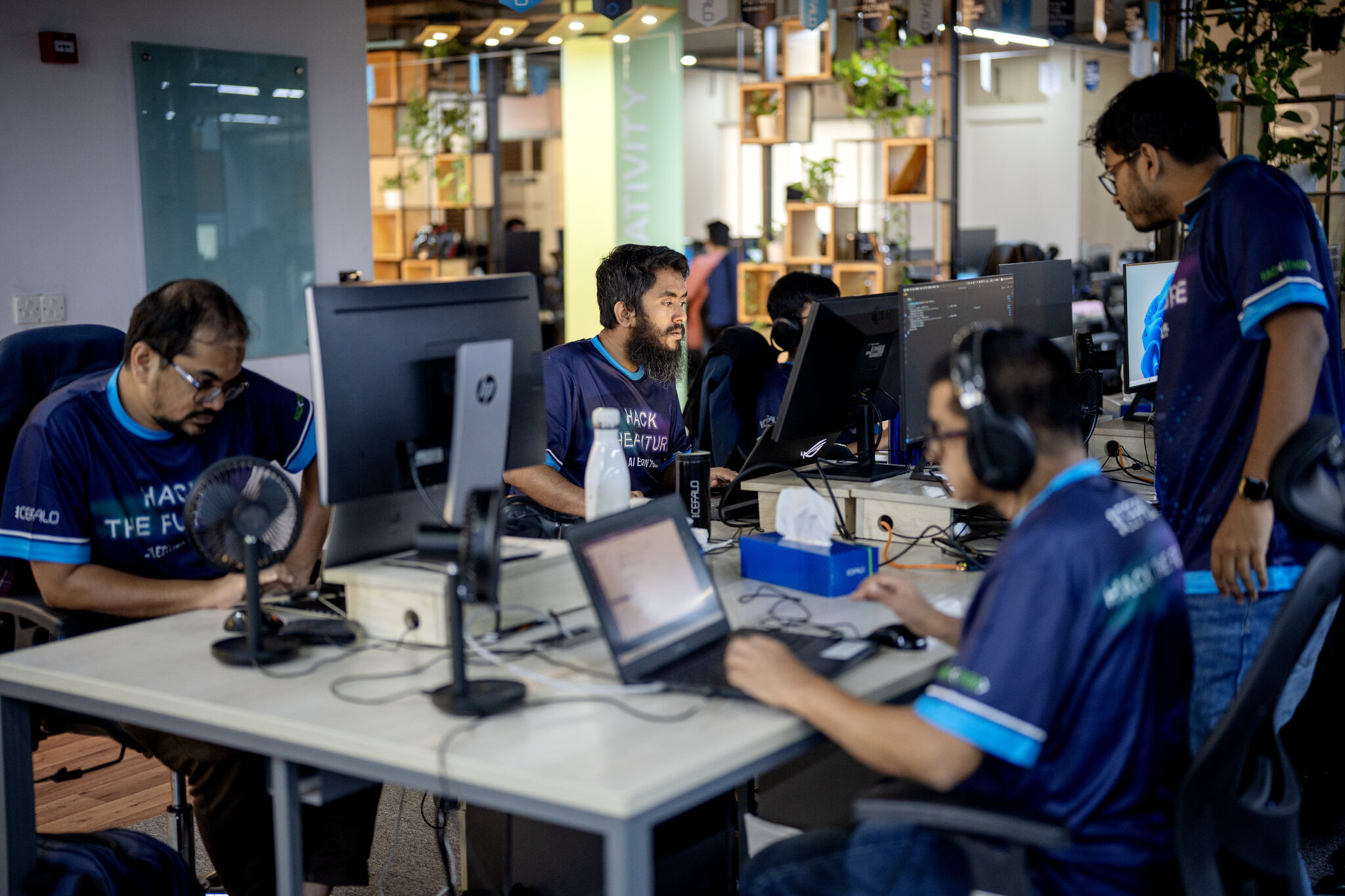
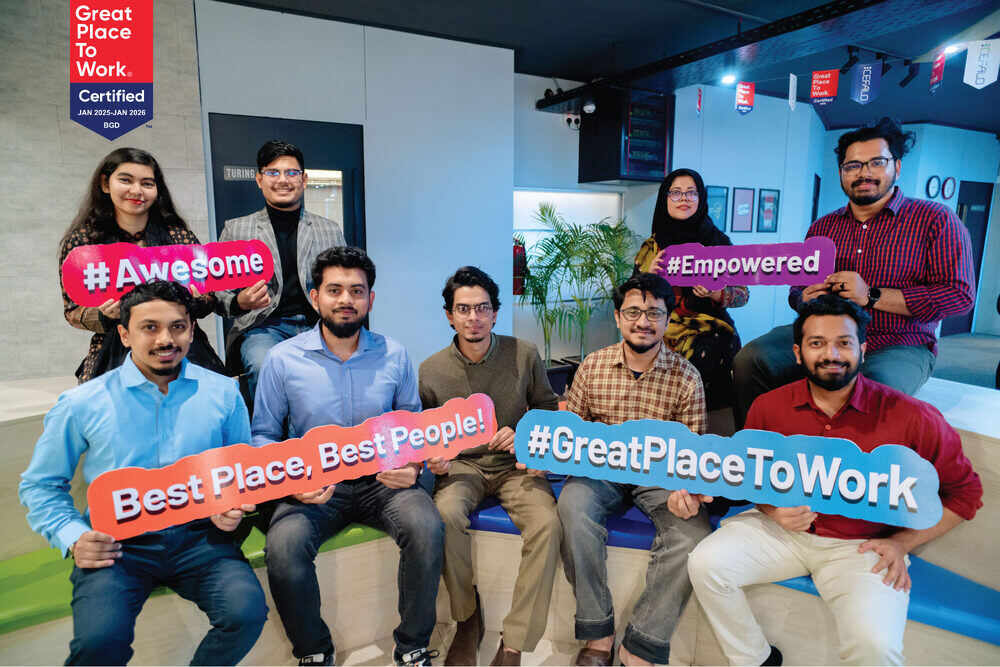
A GREAT PLACE TO WORK FOR DEVELOPERS: Cefalo gets a large amount of applicants when new positions are open. We can select the very best of candidates in Bangladesh when we hire.
The best employer for developers in Bangladesh
For several consecutive years, Cefalo was named Best Outsourcing Company of the Year by the industry association BASIS. Every year the award was given, Cefalo came out on top. Myklebust is proud that the ambition of becoming an employer people want to work for has been realised. Last year’s Great Place to Work surveys showed exceptional results. And this year was no different
– It is almost unbelievable. We had an average score of around 92 percent. According to Great Place to Work, that’s among the very best in the world in our industry, says Myklebust.
At the same time, he remains pragmatic about labels. What matters is what they say about everyday life: Developers enjoy their work, stay with the company and recommend the workplace to others.
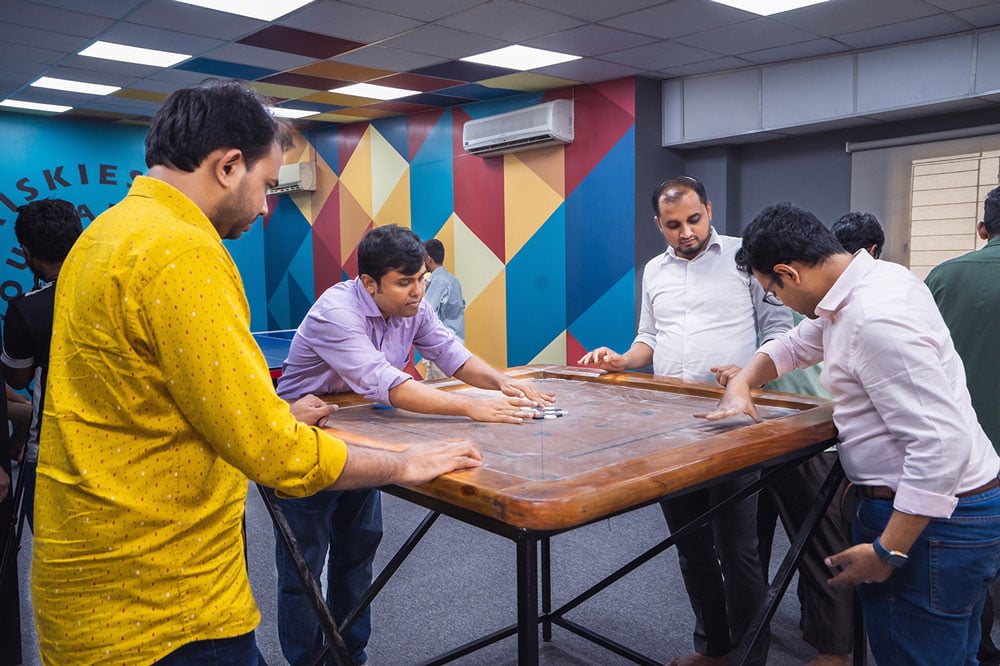
TIME TO RELAX AS WELL: Cefalos offices have time (and room!) for play too.
More of what works
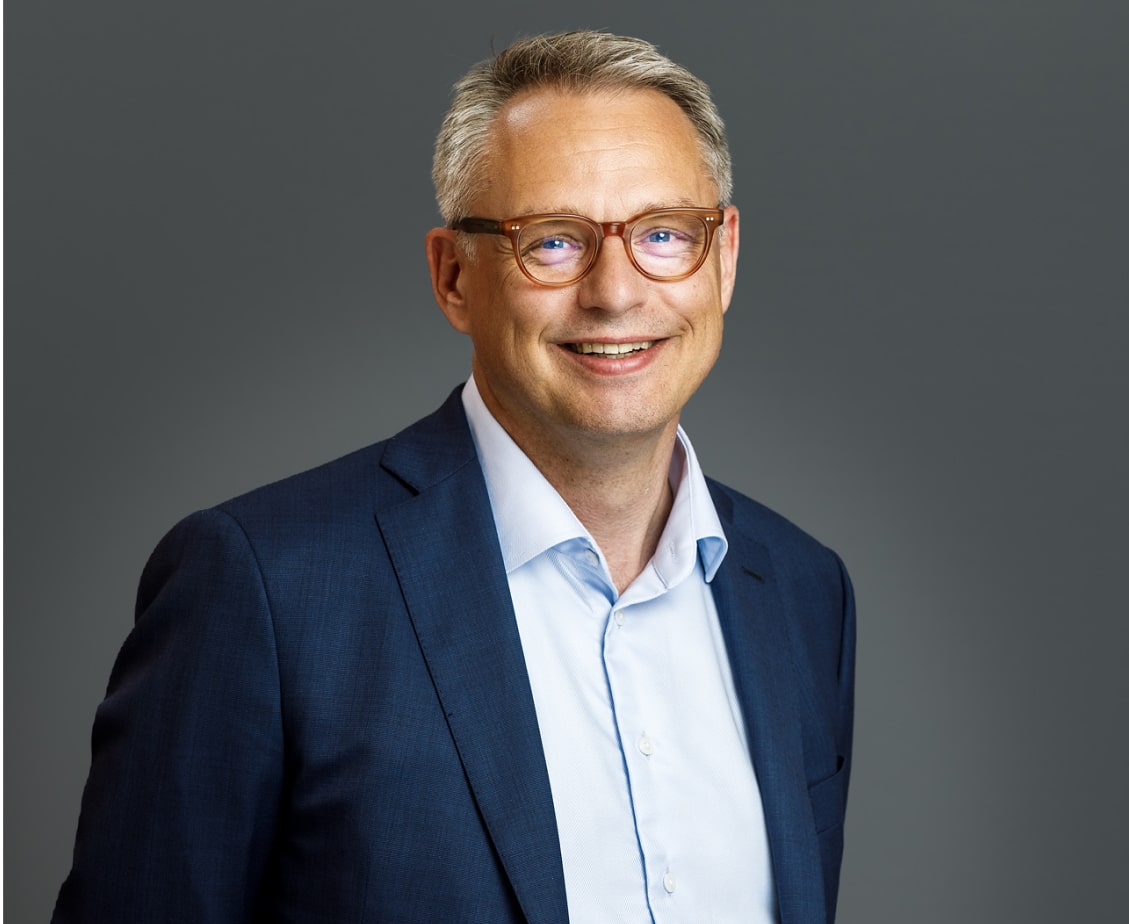
The strategy going forward is not complicated. Per Einar Myklebust has handed over the CEO role to Petter Gustafson, with a mandate to refine the model and continue growing in Norway.
– The Norwegian market alone could probably support us up to around 500 employees, Gustafson believes.
The current technological shift driven by artificial intelligence brings both change and new opportunities.
– Artificial intelligence is a tool – not magic or a threat. We use it to create value for our clients, just as we always have with new tools.
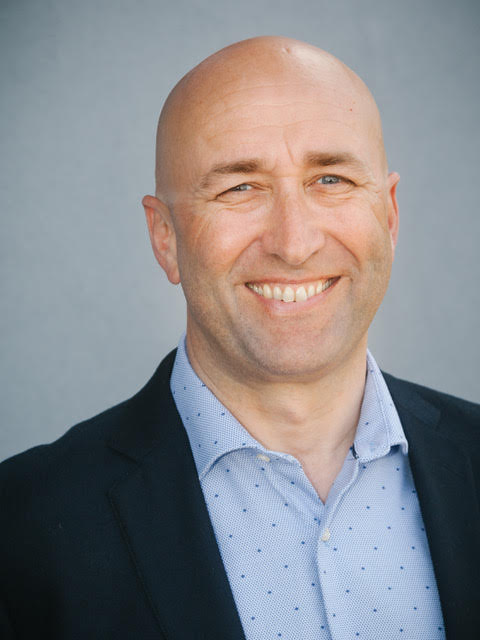
Geographical expansion may come, but only when the timing is right.
– Rolling out the model in other countries would not be unnatural, but the timing has to be right, both former and current CEO emphasise.
Gustafson elaborates:
– Artificial intelligence and other tools may change the speed of value creation, but not the relationship. Our job is still to place people, expertise and responsibility as close to the client as possible.
Want to see references?
We have a lot of different clients, but they are all happy. Read their testimonials in our library.
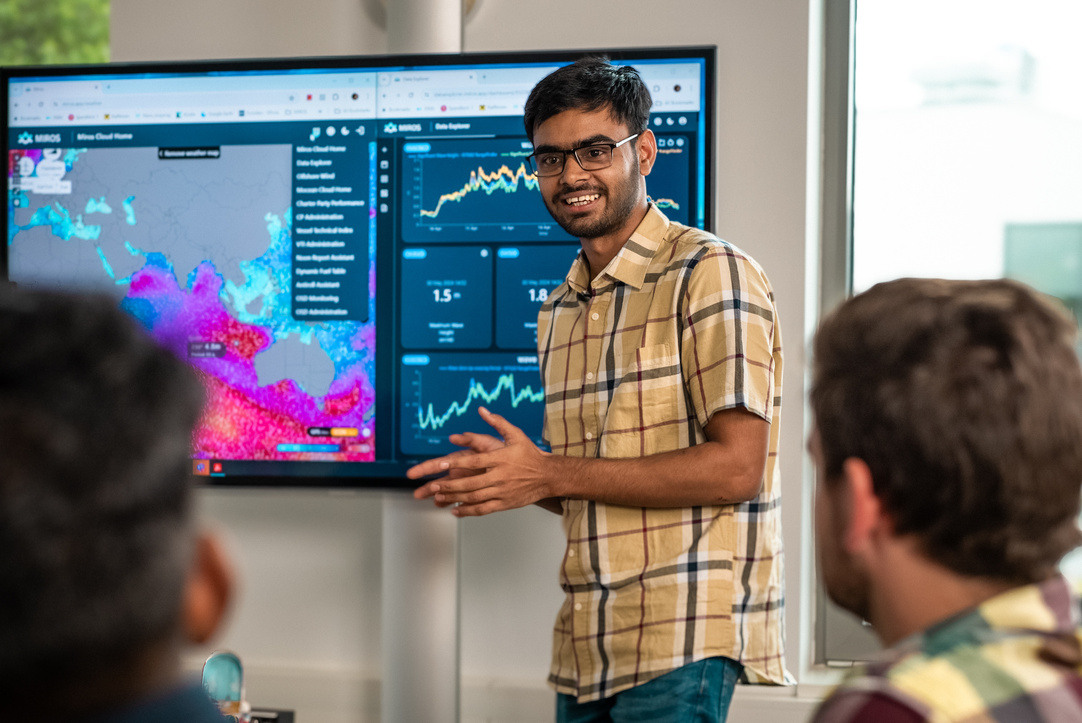
Curious about external development? We would love to talk to you!

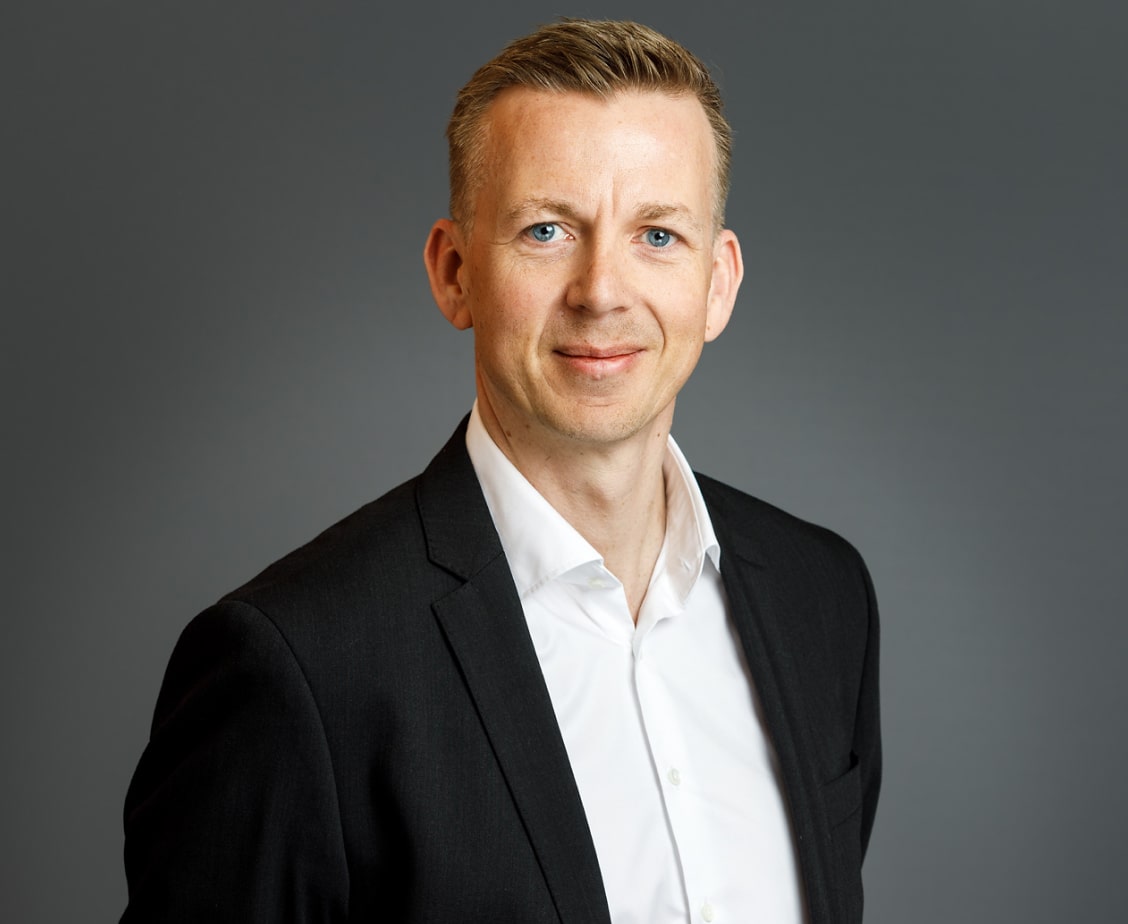
Written by Jens Wahlberg